Science
Learn how nuclear weapons work and the science behind them. The effects of a nuclear weapons are also explained, along with two example scenarios of a nuclear explosion over a city.
History

A comprehensive section chronicling the discovery of nuclear fission, the race for the atomic bomb, the development of the hydrogen bomb and the ensuing Cold War and beyond.
Manhattan Project | Trinity Test | Hiroshima & Nagasaki | Cold War | More »
Resource Library

Peruse an archive of compelling materials including historical documents and treaties, a nuclear history timeline, and a glossary of more than 100 terms.
Media Gallery
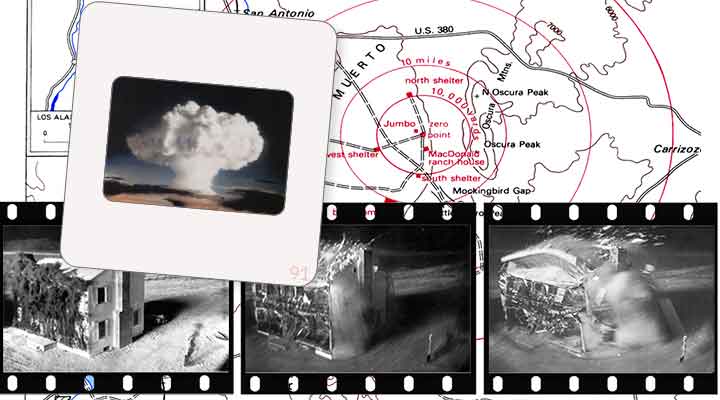
View a collection of historical photographs, animations and video footage.
Photographs | Videos | Maps | More »
Nuclear Almanac
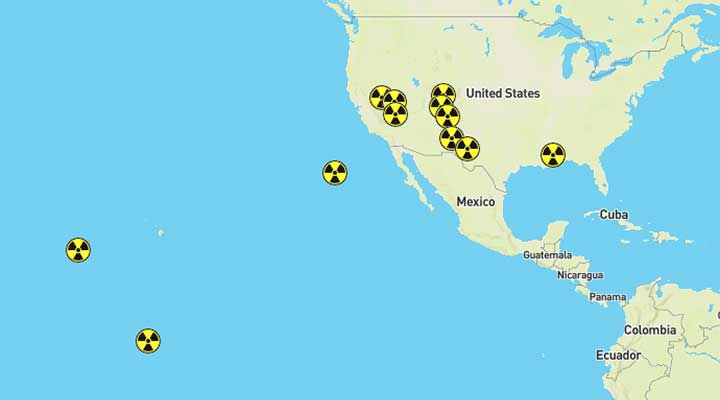
Explore our nuclear world with an extensive collection of data and interactive maps about nuclear stockpiles, facilities, and forces.
Nuclear Facilities | Nuclear Testing | Nuclear Forces | More »
A Visit to the Atomic Testing Museum
The museum, a partnership between the Nevada Test Site Historical Foundation and the Desert Research Institute, is an affiliate of the Smithsonian Institution and is located just east of the Las Vegas strip. The goal of the museum is to preserve and foster public accessibility to the history associated with the Nevada Test Site (NTS) and the Nation's nuclear weapons testing program.

The Cuban Missile Crisis: A Look Back from the Brink
For thirteen days in October 1962 the world waited—seemingly on the brink of nuclear war—and hoped for a peaceful resolution to the Cuban Missile Crisis. This section is a collection of historic documents, photographs and timeline of those 13 days.
